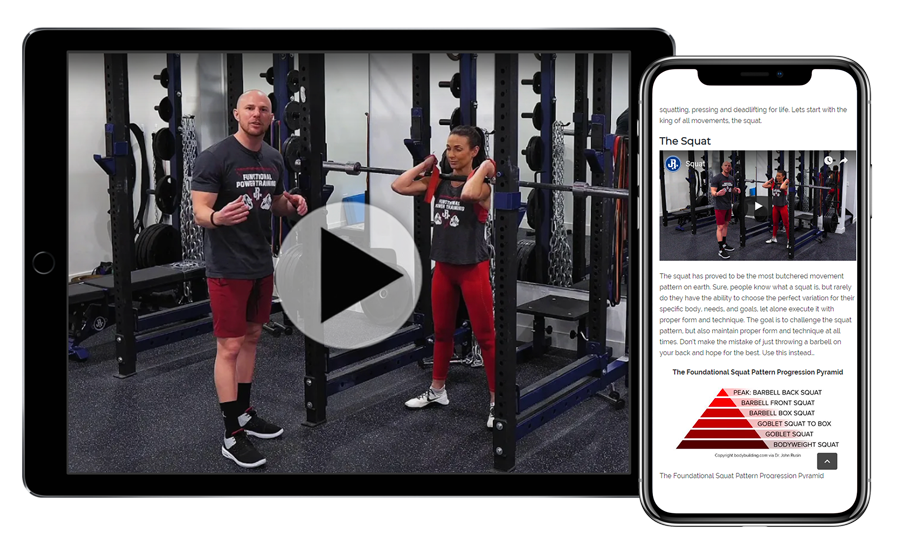
Struggling To Stay Healthy While Progressing Your Squats & Deadlifts?
The squat and the deadlift patterns are the cornerstone of foundational and fundamental movement. They have the ability to develop resilient strength, enhance performance and help prevent chronic and traumatic injuries from occurring. As powerful as these two movements are, their effectiveness is dependent on the correct implementation of the ideal movement pattern variation for each lift, but also sound technique, execution and programming.
Both the squat and hinge present as extremely high ceilings in the achievement of multi-modalic goal sets, but they also happen to be two of the most challenging movement patterns to master and maintain. Many find themselves struggling to progress these staple lifts and stay healthy simultaneously. The main reason why? Through the training and athletic development process the squat and hip hinge patterns have failed to be clearly differentiated from one another.
Here’s why if you want to get the most out of your body while creating resiliency that will stave off injuries and extend physical longevity, people need to differentiate the squat from the hip hinge. Objectively and conceptually differentiating these two from one another will ingrain proper motor control and patterning that will start working for lifters and athletes, not against them.
Differentiating The Squat & The Hip Hinge Movement Patterns
Our bodies have been hardwired from birth to learn, master and habituate foundational movement patterns through a normal developmental sequence. During this sequence, movement patterns like the squat and hip hinge emerge and are quickly put to the test through real time function reacting to ones environment.
Over time, the squat and hinge become automatic representations of well-coordinated and biomechanically succinct movements and are usable actions in a myriad of positions and challenges in life. Well, what’s the problem then? If most everyone squatted and hinged proficiently at one point in time, why can the vast majority of people not maintain these motor abilities?
Our highly sedentary Westernized society negates the most primitive of movement patterns through piss poor postural pitfall positions placed on daily repeat. We detrain ourselves, and lose the ability to move authentically, the way humans were designed to function. And we wonder why the hip hinge aka the deadlift has earned its reputation as the most debilitating exercise in the gym, we’ve forgotten HOW to hip hinge. And in part, our inability to coordinate a hip dominant lower body movement pattern has also pigeon holed our ability to authentically squat as well.
A vast majority of people can conceptualize a squat pattern, of course not necessarily able to execute one, but mightily struggle to wrap their heads around what a hip hinge pattern may entail. This is to be expected, as we’ve detrained the function of the hip hinge pattern over the better part of the last half of the century. So what do most lifters revert to when force-feeding the deadlift and it’s many variations? A butchered hybrid between the squat and hinge that is quite literally the worst of both patterns synergized together.
Stop Squatting Your Deadlifts Vice Versa
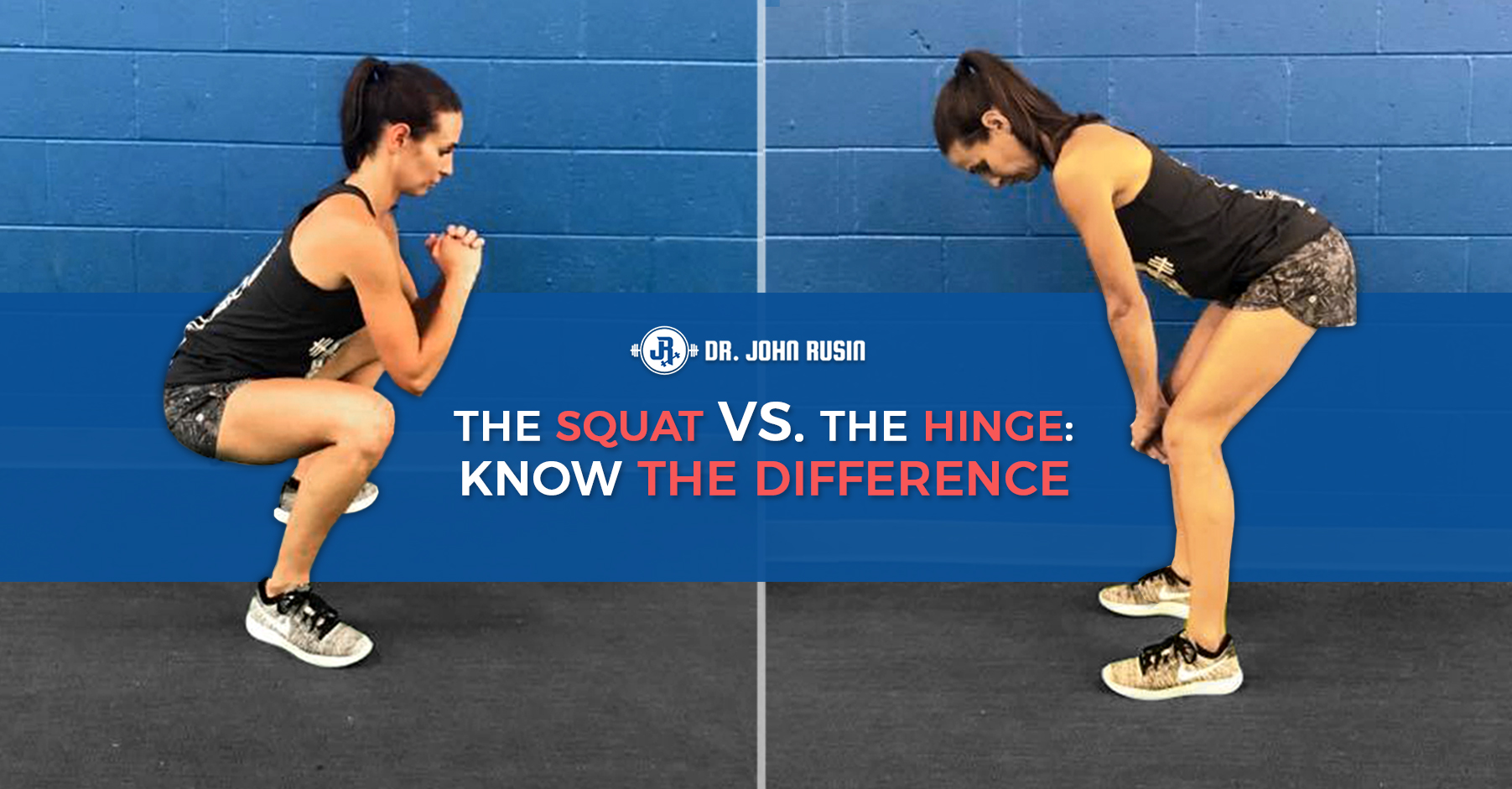
Though there are hingy squats and squatting hinges, the two are not the same and have distinct characteristics that allow us to create umbrellas for each. Though the complexity of the biomechanics of the squat and hinge is nothing to devalue, the main differentiating factor is the joint, which plays a primary role in the execution of each pattern. An authentic squat pattern will incorporate greater emphasized movement placed on the knee joint, while the hip hinge pattern will be lead by articulations happening primarily at the hip, hence the naming of the pattern itself.
Simply put, we can generalize each pattern like this:
- The Squat = Knee Dominant
- The Hip Hinge = Hip Dominant
While there are obviously movements happening at both the hips and knees in both the squat and hip hinge, the primary joint leading the movement itself is the discerning factor when grouping the patterns. But to what degree is something that takes coaching to fine tune these two patterns and differentiate them from one another.
A test that I often use with my athletes to spark that light bulb moment for those who have a nasty habit of squatting their hinges is the hinge back wall test. In just a few seconds with just the use of a wall, we can create the mental shift, which is the first step in building a proper hip hinge movement pattern from the ground up.
From there, we have sparked a neurological motor control change centrally that will create an opportunity to build up both the authentic squat and hip hinge patterns from the ground up… separately. Just remember, when you are fighting your own body during a movement, or the movement causes pain, identify the reason and revert back to building up your individualized foundational patterns.
About The Author

Dr. John Rusin is a sports performance specialist and injury prevention expert that has coached some of the world’s most elite athletes including multiple Olympic gold medalists, NFL and MLB All-Star performers, and professionals from 11 different sports. He has also managed some of the most successful barbell sport athletes in the world including world record holding powerlifters, CrossFit Games athletes, and IFBB professional physique athletes.
His innovative pain-free performance programs have been successfully implemented by over 25,000 athletes worldwide including his best selling training system Functional Power Training, which has revolutionized the way coaches and athletes develop strength, muscle and performance pain-free. Dr. Rusin’s work has gained him the reputation as the go-to industry expert for rebuilding after pain, injuries or plateaus.
About the author : Dr. John Rusin

Related Posts
PLATEAU NO MORE.
THE PAIN-FREE STRENGTH GUIDE
Want to learn how to instantly break PR's in your Bench, Squat and Deadlift, and do it PAIN-FREE? Here's a free guide.