Kick Your Old Warm-Up To The Curb
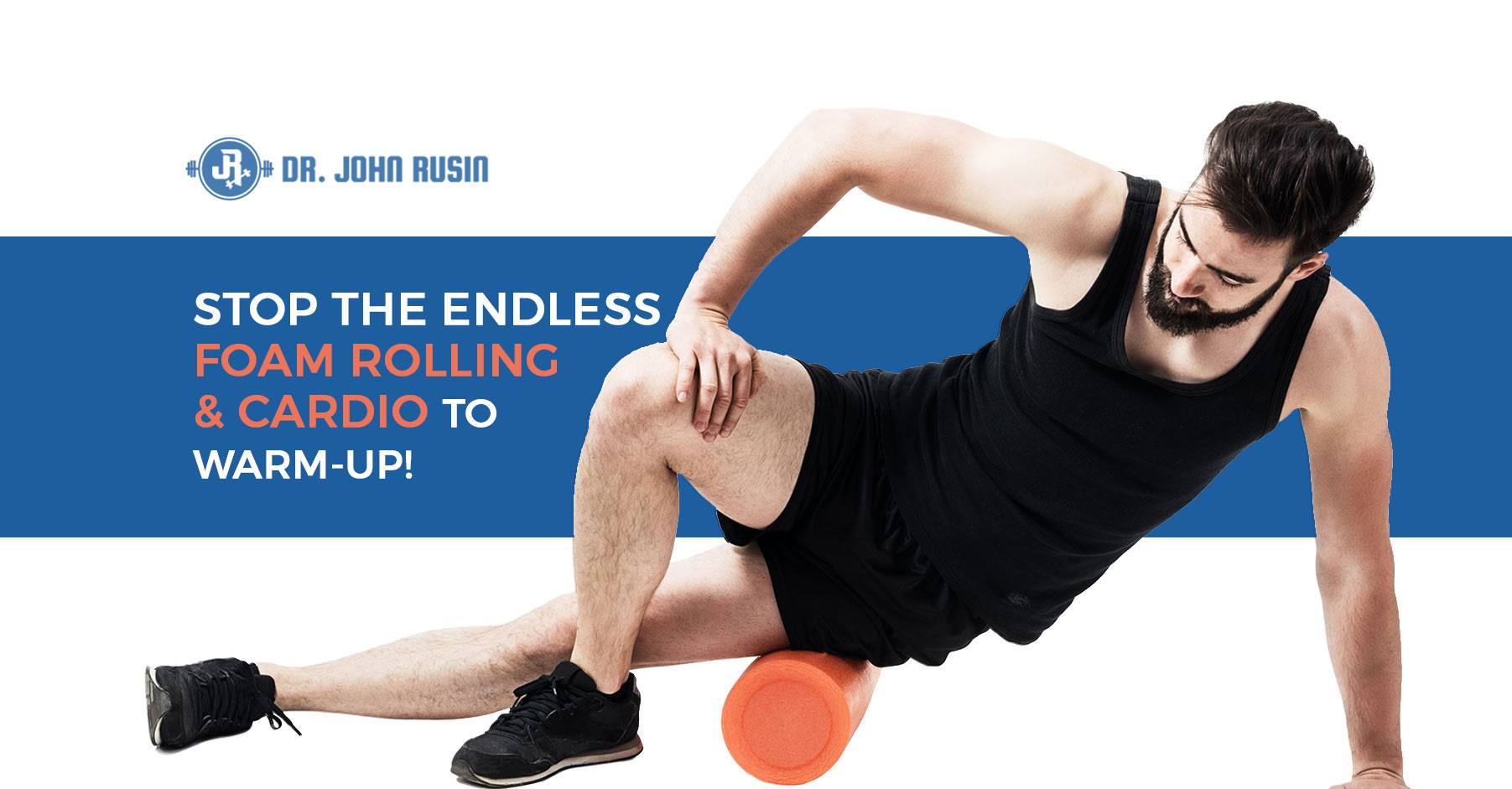
Get stronger, faster, with a smarter approach to warm-ups. It’s a case of “same old, same old” for most people when it comes to warm-ups: foam rolling or riding a stationary bike.
But what if I told you there was a better way? A way that was faster, more specific to your needs as a lifter, and more fun?
What follows is a new warm-up that incorporates explosive power, mobility drills, and stability drills. And you can get it done quickly, giving you more time to hit the stuff that matters most.
Hell. I’ll even throw in something extra that you desperately need: excitement.
Admit it. You’re not always pumped to be in the gym. Sometimes you’re dragging your feet getting in the door. While your training session needs the nuts and bolts to get you to your goal, your warm-up doesn’t have to be the same ol’ mind-numbing routine. Keep things fun and interesting, even playful.
Let’s not forget that increased physical and psychological arousal will translate to an improved lifting session. And if you’re having more fun with your warm-ups and your program, you’ll stick it out.
The Warm-Up Beyond Foam Rolling
For the longest time I swore by the foam roller, both as a coach and and lifter. Every session started the same way: lie down on the floor and roll around on a dense ball or roller to try and undo all the “knots” and “scar tissue” to promote blood flow and improve tissue quality.
Before long, this simple floor routine took 15 to 20 minutes of my training sessions. This left less time to do actual hard work. While the foam roller has its place, its utility has been abused over the years.
Many lifters hop on the treadmill or stationary bike for five minutes to “get blood flowing.” No real harm can come from this, but what are the benefits? Five minutes of low-intensity aerobic exercise isn’t specific in terms of substrate needs, range of motion, or muscle contraction speed. In other words, It doesn’t really help help you lift heavy shit off the floor.
Let’s face the real issue. Aside from being less than optimal, these traditional warm-ups are uninspiring and boring.
It all started with me borrowing ideas and methods from different camps and piecing them together. I began focussing on what I really needed to get the most of my time in the gym. For a lifting session to be great, you need a few things from your warm-up: How can you address these needs in the shortest time possible? How about a circuit that covers all these and more? I’ll present it in it’s entirety first, then explain it more in detail: 1) KB Swings x 10 2) KB Squats x 5 3) Band Pull-aparts x 20 4a) Spiderman In-step x 5/side 4b) T-spine windmill x 5/side 4c) Cossack Squat x 5/side Run the circuit three times, completing the swings, squats, and pull-aparts each round. In round 1, do a Spiderman In-step x 5/side. In round two, complete T-spine rotation x 5/side. In the last round, complete a Cossack Squat x 5/side. After three rounds and about 5 minutes you will have: [Tweet “If it’s important, do it every day. -Andy Van Grinsven” ] This warm-up not only provides the benefits outlined above, but also gives us additional opportunity to work on our technique without compromising our workouts. Let’s take a further look at the details: How to do it: The program starts with the kettlebell swing for several reasons.The first is that it represents a low-level explosive lift, which helps prime muscles to contract faster and more forcefully later in our workout. Second, since the swing is in the hip-hinge family of exercises, it provides additional practice to improve technique. A powerful hip hinge will translate into improved performance for both the deadlift and athletic qualities like sprinting, cutting, and jumping. How to do it: The KB Squat serves several purposes as well. It gives you rep practice to perfect your technique, while improving both trunk stability (due to the position of the ‘bell) and hip/ankle/thoracic spine mobility. The idea is simple: proximal stability will provide better distal mobility. A handful of goblet squats is plenty of stimulus to activate trunk muscles. This effectively takes the foot off the brakes, if you will, and allows you to sit deeper into your squat with greater ease, improving your performance and reducing your risk of injury. How to do it: Band pull-aparts help fight bad posture, build strength and mass in our posterior delt and upper back, and keeps our shoulders movin’ and groovin’ well for the long-haul. How to do it: The Spiderman In-step is a great catch-all mobility drill, providing not only a hamstring stretch for the front leg, but a hip flexor stretch for the trailing leg. With the added rotation, you can further improve thoracic mobility and upper back posture. How to do it: Thoracic spine mobility is emphasized in this drill, since most of us tend to lose our ability to rotate through our upper backs due to poor posture at work or home. While there are many alternatives, this one works best in my experience: If the client or athlete tries to cheat the drill, the leg pinning the foam roller pops up. So cueing is much easier. Additionally, the athlete can see improvement in this drill over time as he or she will be able to keep their fingertips on the floor throughout the rotation. How to do it: The cossack squat is a great drill because it not only provides hip mobility, but also gets us out of the sagittal plane that we live in. You can easily regress this movement too, with the addition of a squat rack or TRX to hang from. This one is for coaches. Why do the good ones tend to use reps in multiples of five? Because it’s hard for a lifter to forget. When you start adding 6’s, 8’s, and 10’s, confusion sets in and you have a trainee who’s asking questions and not working. How many sets and reps of this warm-up are up to you. I would keep it simple. Remember that this is a warm-up. Breathless and sweaty is fine, but there is still a workout to be done. Assign reps sparingly. Let’s recap: for our lifts to be stellar, we need a better and more comprehensive warm-up. We need mobility, stability, and explosive power so our workouts are effective and safe. We also need to spend as little time as necessary in order to get into the meat ‘n potatoes of our lifting session. The above program is a great place to start. The KB swings and squats address explosive hip extension, squat depth, core strength, and hip mobility in two drills. The band pull-aparts serves as extra upper back pulling volume, while providing the obvious benefits of increased shoulder strength and improved posture through posterior shoulder muscle activation. The three mobility drills are some of my favorites and good catch-all drills. However there are no hard and fast rules here. Experiment with different mobility drills based on your or your clients’ needs, and adjust accordingly. A final note. Foam rolling or bike riding are far from useless in warm ups.This isn’t an either/or situation. Do like we all do in this industry: implement what is useful and discard what is not. For more from Andy visit his website: AndyVanGrinsven.com
A great warm-up fires you up both psychologically and physiologically. You should be primed and ready to lift with gusto and intensity.
An Intelligent Results-Driven Warm Up Process
The Dynamic Warm Up Program
The Kettlebell Swing
The Kettlebell Goblet Squat
Band Pull-Aparts
Spiderman In-Step w/Rotation
T-Spine Windmill
Cossack Squat
The Reasoning Behind The Rep Scheme
Be Better Than The Lazy Bike, Warm Up Intelligently
About The Author

Andy Van Grinsven is a Nashville-based Personal Trainer and Strength Coach with a Master’s degree in Exercise Physiology and CSCS through the NSCA. He shows average Janes and Joes how to leverage bars, kettlebells, and bodyweight to improve movement quality, strength, and body composition. His training philosophy is to keep things simple, progressive, and fun. When he’s not training clients, he’s nose-deep in a book or walking his beloved dog, Jane. He loves BBQ and deadlifts, but only luke-warm to Nashville’s country music scene.
About the author : Andy Van Grinsven

Related Posts
PLATEAU NO MORE.
THE PAIN-FREE STRENGTH GUIDE
Want to learn how to instantly break PR's in your Bench, Squat and Deadlift, and do it PAIN-FREE? Here's a free guide.